About 16 minute read
EPDM Roofing: The Complete Guide for Building Owners
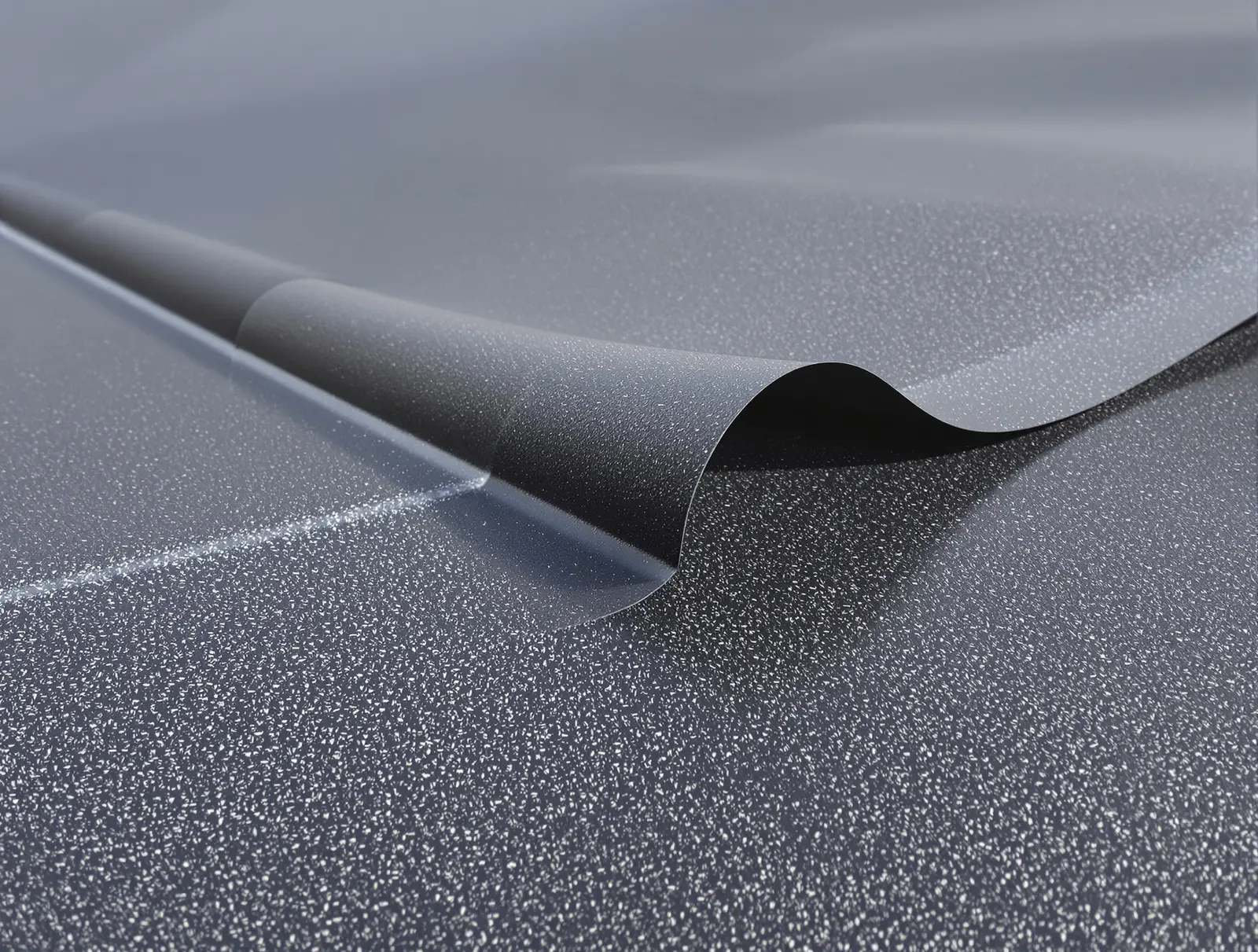
Building owners choose EPDM for three reasons: proven long-term durability, lower installed cost compared to PVC and standing seam metal, and a track record that no other single-ply membrane can match. EPDM roofs installed in the 1970s are still in service today. That kind of field-proven performance gives building owners confidence that the material itself will hold up.
The honest trade-off with EPDM is its seam system. Unlike TPO and PVC, which use heat-welded seams that fuse the membrane into a continuous sheet, EPDM seams rely on adhesive tape or contact cement. These adhesive bonds are the membrane's weakest point and the primary source of leaks in aging EPDM roofs. Understanding this trade-off is essential to making a sound roofing decision.
This guide covers everything a building owner needs to know about EPDM: how the membrane works, what it costs, where it excels, where it falls short, and how to select a contractor who will install it correctly. Every cost figure reflects current Gulf Coast pricing, and every recommendation comes from a building-owner perspective.
How EPDM Works
EPDM is a thermoset rubber membrane, meaning it is chemically cross-linked (vulcanized) during manufacturing and cannot be re-melted or heat-welded after curing. This fundamental chemistry is what separates EPDM from thermoplastic membranes like TPO and PVC, and it directly determines how seams are made.
The membrane is manufactured in large sheets — typically 10, 20, or 45 feet wide and up to 200 feet long. Wider sheets mean fewer seams on the finished roof, which is a significant advantage since seams are the system's primary vulnerability. A 45-foot-wide EPDM sheet can cover a large roof area with minimal field seaming.
Because EPDM cannot be heat-welded, field seams are created by bonding overlapping membrane edges with 6-inch-wide splice tape or liquid contact adhesive. The installer cleans both surfaces, applies EPDM-specific primer, positions the splice tape, and rolls the seam with a steel roller to achieve full contact. Seam quality depends entirely on the installer's technique, surface cleanliness, and weather conditions during application.
Three attachment methods are used to secure EPDM to the roof deck: mechanically attached (fasteners and plates along seam lines),
Key Specifications
EPDM membranes are defined by three primary specifications: thickness (measured in mils), color, and seam type. Understanding these specifications is critical when evaluating contractor proposals and manufacturer warranties.
| Specification | 45 mil | 60 mil | 90 mil |
|---|---|---|---|
| Thickness | 0.045 inches | 0.060 inches | 0.090 inches |
| Color | Black (standard) / White | Black (standard) / White | Black only |
| Sheet Widths | 10, 20, 45, 50 ft | 10, 20, 40, 50 ft | 10 ft |
| Seam Method | Adhesive splice tape or contact cement | Adhesive splice tape or contact cement | Adhesive splice tape or contact cement |
| Attachment | Mechanical, ballasted, or adhered | Mechanical, ballasted, or adhered | Ballasted or adhered |
| Typical Application | Budget projects, recover, low traffic | Standard commercial, NDL warranty | Premium/demanding applications |
| Expected Lifespan | 20-25 years | 25-30 years | 30+ years |
| Elongation | 300%+ | 300%+ | 300%+ |
Performance Characteristics
EPDM's rubber chemistry delivers outstanding weathering performance. The membrane resists UV degradation, ozone, and temperature extremes without the plasticizers that can migrate from PVC or the stabilizers that TPO requires. Field studies of EPDM membranes removed after 30+ years of service show that the rubber itself retains much of its original flexibility and tensile strength.
Flexibility is EPDM's defining physical property. With 300%+ elongation, EPDM can stretch to three times its original length and recover without damage. This flexibility allows the membrane to accommodate building movement, thermal expansion, and minor structural settling that would crack or tear a rigid membrane. In cold climates, EPDM remains pliable well below zero degrees Fahrenheit.
Wind performance is strong across all attachment methods. Mechanically attached EPDM achieves high wind-uplift ratings through fastener density at the roof perimeter and corners. Fully adhered systems distribute wind loads across the entire bonded surface. Ballasted systems rely on the weight of stone or pavers to resist uplift, which works well on structurally adequate decks.
Puncture resistance is adequate for most commercial applications. EPDM's rubber composition absorbs impact rather than cracking, but the membrane can be cut or punctured by sharp objects. Walkway pads are recommended in high-traffic areas around rooftop equipment. A cover board beneath the membrane provides additional protection against deck irregularities and dropped tools.
Where EPDM Excels
Large, open roof areas with minimal penetrations are EPDM's sweet spot. A 100,000-square-foot warehouse roof with a dozen HVAC curbs and a handful of pipe penetrations is exactly the kind of project where EPDM delivers maximum value. The membrane's large sheet sizes minimize seam footage, and the straightforward installation keeps labor costs low.
Budget-conscious building owners consistently find EPDM attractive. At $5.00 to $8.00 per square foot installed, EPDM is the lowest-cost single-ply membrane system. For a building owner managing multiple properties with limited capital budgets, EPDM provides reliable waterproofing protection at a price point that makes deferred maintenance less likely.
Recover applications over existing smooth-surfaced roofs are another area where EPDM shines. The membrane's flexibility and lightweight construction make it well-suited for installation over aged EPDM, smooth modified bitumen, or BUR with a smooth flood coat. Recover avoids the cost and disruption of tear-off, and EPDM's large sheets cover the existing surface quickly.
Buildings in moderate climates where cooling costs are not a primary concern get the best return from EPDM. If your building is well-insulated, occupancy density is low, and energy costs are manageable, the premium for a white reflective membrane (TPO or PVC) may not pay back within the roof's service life. EPDM gives you solid waterproofing without the reflective membrane surcharge.
Where EPDM Falls Short
Seam reliability is the honest concern with EPDM. Every roofing consultant and every honest contractor will tell you the same thing: adhesive-bonded seams are inherently less durable than heat-welded seams. A properly welded TPO or PVC seam fuses the membrane into a single, continuous sheet — the seam is literally stronger than the membrane itself. An EPDM adhesive seam depends on a chemical bond that degrades over time.
Energy efficiency is limited in the standard black configuration. Black EPDM absorbs up to 90% of solar radiation, transferring that heat into the building below. On the Gulf Coast, where cooling loads dominate energy costs for eight or more months per year, this thermal penalty is significant. A building with 50,000 square feet of black EPDM can spend thousands more per year on cooling compared to the same building with a white TPO or PVC membrane.
Chemical vulnerability rules out EPDM for restaurants, food processing facilities, and any building with rooftop exhaust that contains grease, animal fats, or petroleum-based solvents. These substances attack the rubber compound, causing swelling, softening, and premature failure. PVC is the appropriate membrane for any chemical-exposure environment.
Aesthetics are not EPDM's strength. The standard black membrane shows every patch, repair, and piece of debris. White EPDM is available but less common and more expensive, reducing the system's cost advantage. For architecturally visible rooftops or buildings where appearance matters, TPO, PVC, or standing seam metal offer a cleaner look.
Gulf Coast Considerations
The Gulf Coast climate presents specific challenges for every roofing system, and EPDM is no exception. High humidity, intense solar radiation, frequent heavy rainfall, and hurricane-force wind events all influence how EPDM performs in Mississippi, Alabama, and the Florida panhandle.
Heat absorption is the primary Gulf Coast concern with black EPDM. Summertime roof surface temperatures on a black EPDM membrane routinely exceed 170 degrees Fahrenheit. That thermal load increases cooling energy consumption and accelerates membrane aging. Building owners on the Gulf Coast should factor energy cost differences into their lifecycle analysis when comparing EPDM to white reflective membranes.
Hurricane readiness requires proper attachment design. EPDM performs well in high-wind events when the attachment system is engineered for the specific wind zone. Mechanically attached systems with increased fastener density at the perimeter and corners provide excellent uplift resistance. Ballasted systems are generally not recommended for Gulf Coast buildings in hurricane-prone zones because stone can become projectile in extreme winds.
High humidity demands vigilant seam maintenance. The Gulf Coast's moisture-rich environment accelerates adhesive degradation in EPDM seams. Semi-annual seam inspections — spring and fall — are non-negotiable for EPDM roofs in this climate. Early detection of lifting seam edges allows for a $200-$500 repair that prevents thousands of dollars in insulation saturation and interior damage.
Cost Analysis
EPDM roofing costs $5.00 to $8.00 per square foot installed on the Gulf Coast, including membrane, insulation, fasteners or adhesive, flashings, and labor. This range reflects new construction with typical access conditions and standard roof complexity. Your actual cost depends on several specific factors.
| System Configuration | Cost per SF |
|---|---|
| 45 mil mechanically attached, standard insulation | $5.00 - $6.00 |
| 60 mil mechanically attached, enhanced insulation | $5.75 - $7.00 |
| 60 mil fully adhered, cover board, enhanced insulation | $6.50 - $8.00 |
| 90 mil fully adhered, premium assembly | $7.50 - $8.00+ |
Factors that push costs higher include small roof size (under 10,000 square feet), difficult access requiring crane or boom lift, extensive flashing details around equipment curbs, tear-off of existing roofing, and premium insulation configurations required by current energy codes. Each of these factors can add $0.50 to $2.00 per square foot to the base cost.
Factors that keep costs lower include large roof area (over 30,000 square feet), straightforward access, minimal penetrations and equipment curbs, recover over existing smooth roof (no tear-off), and mechanically attached installation rather than fully adhered. High-volume projects with simple geometry deliver the lowest per-square-foot pricing.
EPDM Cost Estimate
$50,000 – $80,000
At 10,000 SF, a EPDM roof would run approximately $5-$8/sf installed, depending on membrane thickness, attachment method, insulation requirements, and access complexity.
For a detailed estimate, use our full Cost Estimator →Service Life and Longevity
EPDM roofs typically deliver 20 to 30 years of service when properly installed and maintained. That range is not a manufacturer's optimistic projection — it reflects decades of real-world performance data from millions of installed square feet. Some well-maintained EPDM installations have exceeded 40 years, making EPDM the most field-proven single-ply membrane in commercial roofing.
The membrane itself is remarkably durable. EPDM's cross-linked rubber chemistry provides inherent resistance to UV radiation, ozone, and thermal cycling. Unlike thermoplastic membranes that rely on stabilizers and plasticizers to maintain flexibility, EPDM's rubber compound is stable by nature. The membrane ages gracefully, gradually losing some flexibility and tensile strength over decades rather than degrading suddenly.
Service life is ultimately determined by seam performance, not membrane performance. The vast majority of EPDM roofs that fail before 25 years do so because of seam deterioration, not membrane degradation. This means that proactive seam maintenance — inspecting twice per year and repairing any lifting edges promptly — is the single most impactful action a building owner can take to maximize EPDM service life. Our maintenance program guide explains how to build that discipline into your building operations.
Attachment method also influences longevity. Fully adhered systems tend to outperform mechanically attached systems over 25+ years because the membrane is bonded across its entire surface, reducing stress concentration at attachment points. Ballasted systems protect the membrane from UV and physical damage, which can extend service life, but they make leak detection and seam inspection more difficult.
Warranties
EPDM manufacturer warranties range from 10 to 30 years depending on membrane thickness, attachment method, and contractor certification level. The warranty landscape for EPDM is mature and well-established, reflecting the membrane's long market history.
Material-only warranties cover the cost of replacement membrane material if the product fails due to a manufacturing defect. These warranties are included at no additional cost but provide limited protection — they do not cover labor, insulation, interior damage, or business interruption. A material-only warranty on a 30,000-square-foot EPDM roof might cover $15,000 to $25,000 of a $200,000+ claim.
No-Dollar-Limit (
Warranty requirements you should understand: Most EPDM warranties require the building owner to perform regular maintenance and keep documented records. Failure to maintain the roof — including clearing drains, inspecting flashings, and repairing seam defects — can void your warranty. Warranties also typically require notification within 30 days of a discovered leak and may require the manufacturer's approved contractor to perform repairs.
Contractor Selection
EPDM installation quality depends more on the crew than on the material. The membrane is forgiving — it stretches, conforms, and can be repositioned during installation. But the seaming process is technique-sensitive, and poor seam execution is the primary cause of premature EPDM failures. Selecting the right contractor is not optional with this system.
Manufacturer certification is the baseline requirement. Major EPDM manufacturers — Carlisle, Firestone, and Johns Manville — all maintain certified contractor programs. Certification means the contractor's crews have been trained in the manufacturer's specific installation procedures and that the contractor has met minimum experience and insurance requirements. Verify certification directly with the manufacturer, not just the contractor.
Ask specifically about seaming experience and quality control. How does the crew verify seam quality during installation? Do they perform probe testing on every seam? What are their procedures when weather conditions are marginal — do they stop seaming when humidity is high or temperatures are borderline? A contractor who answers these questions confidently and specifically is one who takes EPDM seam quality seriously.
Request references for EPDM projects of similar scope. A contractor who installs 100,000+ square feet of EPDM per year has a different skill set than one who installs EPDM occasionally between TPO projects. Look for a contractor whose crews work with EPDM regularly and who can show you completed projects with similar building types, roof sizes, and complexity levels.
Evaluate the warranty offering carefully. If the contractor is certified to issue NDL warranties from the EPDM manufacturer, that means the manufacturer trusts their installation quality enough to stake their own financial liability on it. A contractor who can only offer a standard material warranty may not have the certification level required for the best warranty coverage.
Frequently Asked Questions
How long does an EPDM roof last?
A properly installed and maintained EPDM roof typically lasts 20 to 30 years. Some well-maintained installations have exceeded 40 years of service. Membrane thickness, attachment method, seam maintenance, and climate exposure all influence actual service life. The membrane itself is extraordinarily durable — it is seam maintenance that determines whether an EPDM roof reaches its full potential.
Is EPDM better than TPO?
Neither system is universally better — the right choice depends on your building's specific requirements. EPDM costs less and has a longer field-proven track record, but uses adhesive seams that are less reliable than TPO's heat-welded seams. TPO offers superior energy efficiency with its white reflective surface. For a detailed comparison, see our TPO vs. EPDM comparison guide, or use the system comparison hub to evaluate all options side by side.
What does EPDM roofing cost per square foot?
EPDM roofing typically costs $5.00 to $8.00 per square foot installed on the Gulf Coast, including membrane, insulation, and labor. A 45 mil mechanically attached system runs $5.00 to $6.00 per square foot, while a 60 mil fully adhered system with enhanced insulation runs $6.50 to $8.00 per square foot. Smaller roofs, difficult access, and tear-off requirements push costs higher. Use our cost estimator for a project-specific estimate.
What is the biggest problem with EPDM roofs?
The adhesive-bonded seam system is EPDM's primary vulnerability. Unlike TPO and PVC, which use heat-welded seams that fuse the membrane into a monolithic sheet, EPDM relies on adhesive tape or contact cement to join membrane panels. These seams can deteriorate over time, especially under ponding water, UV exposure, or poor installation conditions. Proactive seam maintenance is essential.
Can EPDM be installed over an existing roof?
Yes, EPDM is frequently used in recover applications over existing smooth-surfaced roofs, including aged EPDM, smooth modified bitumen, and BUR with a smooth flood coat. The existing roof must be dry, structurally sound, and free of trapped moisture. Building codes typically limit total roof assemblies to two layers, so if the existing roof is already a recover, tear-off may be required.
Does EPDM come in white?
White EPDM is available but uncommon. Standard EPDM is black, which absorbs solar heat and does not qualify as a cool roof. White EPDM costs more and has a shorter track record than standard black. If energy efficiency is a priority for your building, TPO or PVC are typically better choices than white EPDM because they offer white membranes as the standard product.
How often should EPDM seams be inspected?
EPDM seams should be inspected at least twice per year — once in spring and once in fall — and after any major weather event. Seam inspection is the single most important maintenance task on an EPDM roof. A qualified roofer can inspect seams, drains, flashings, and membrane condition in a few hours, and early detection of lifting seam edges allows for low-cost repair before water infiltrates the insulation.
Is EPDM good for the Gulf Coast climate?
EPDM performs well in the Gulf Coast climate in terms of flexibility, weather resistance, and wind performance. However, the black membrane absorbs significant solar heat, increasing cooling costs. EPDM's adhesive seams also require more vigilant maintenance in the Gulf Coast's high-humidity, high-rainfall environment. Building owners should weigh EPDM's cost advantage against TPO's energy savings and welded-seam reliability for their specific building.
What thickness of EPDM should I specify?
For standard commercial buildings, 45 mil is the minimum suitable for mechanically attached or ballasted systems with moderate traffic. 60 mil is the enhanced specification for fully adhered systems, longer warranty terms, and improved puncture resistance. 90 mil is a premium, less common option for maximum durability. Most commercial roofing consultants specify 60 mil for standard projects where a 20-year NDL warranty is desired.
Can EPDM be repaired or patched?
EPDM is one of the easiest roofing membranes to repair. Patches are applied using EPDM-specific primer and splice tape or adhesive, creating a durable bond. Repair materials are inexpensive and widely available, and experienced roofers can complete most patch repairs in under an hour. The critical requirement is using EPDM-compatible materials — generic caulks and sealants are not compatible with EPDM rubber and will fail.