About 11 minute read
Ponding Water on Flat Roofs: Measurement, Causes, and Solutions
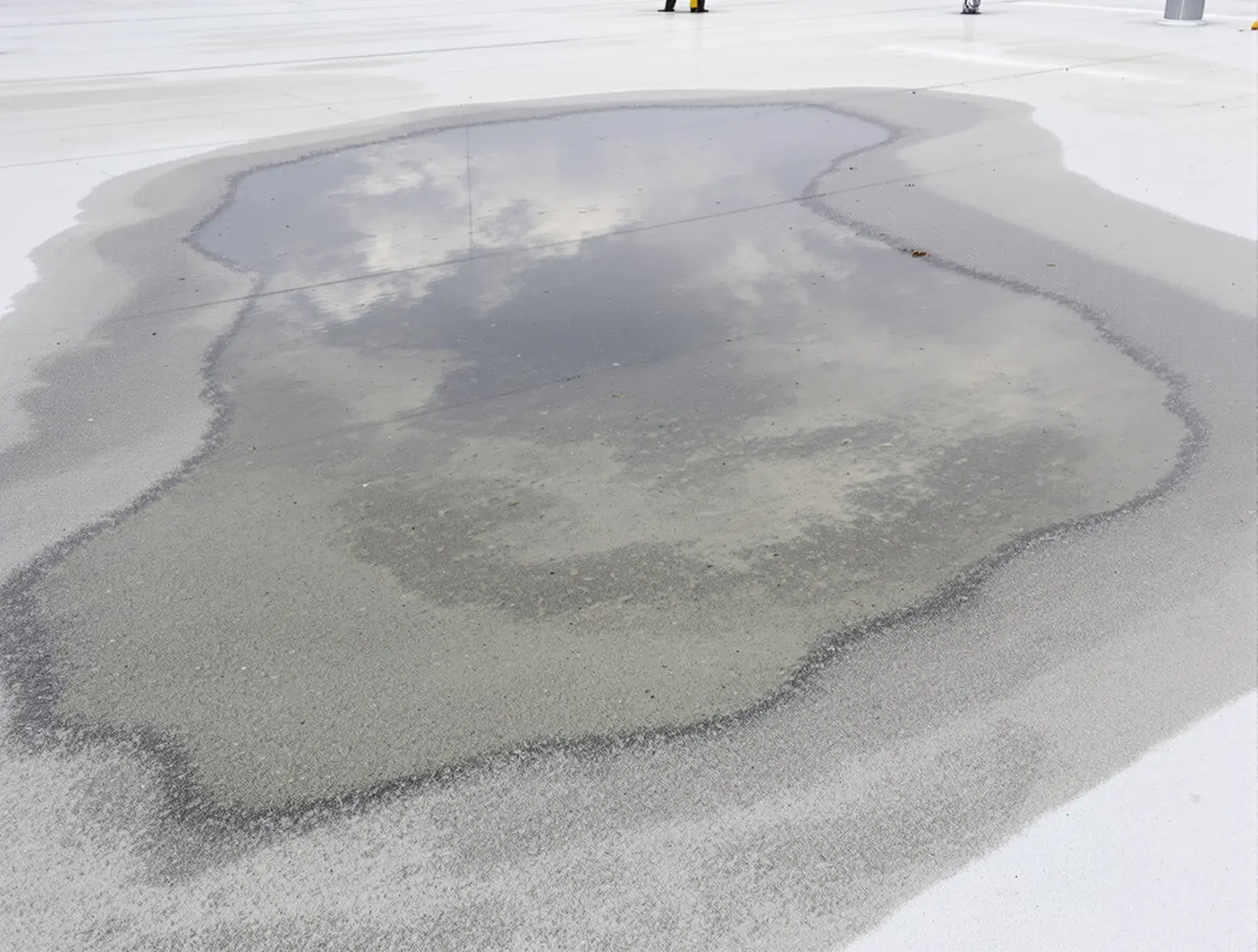
Ponding is not just a nuisance — it is a progressive structural and waterproofing problem. Water weighs 5.2 pounds per square foot per inch of depth. A ponding area of 2,000 square feet at 1.5 inches deep adds over 15,600 pounds of unplanned dead load to your structure. That weight causes the deck to deflect further, which creates a deeper depression, which holds more water. This self-reinforcing cycle is why ponding conditions almost always worsen over time if left unaddressed.
Use the assessment tool below to evaluate the severity of your ponding condition. The tool will guide you through the key diagnostic questions — timing, depth, area, and pattern — and provide a severity rating with recommended next steps.
How serious is your ponding?
Question 1 of ~5
When did the last rainfall end?
How to Identify Ponding Water
The 48-hour rule is the foundation of ponding assessment. Note the time when the last rainfall ends — not when it started, and not when the sun came out. Check the roof at the 48-hour mark. If water remains in any area, you have confirmed ponding. If you are unsure when rain stopped, the more conservative approach is to check the roof 48 hours after the last day of wet weather.
Visual indicators of ponding are often visible even when the roof is dry. Areas that pond regularly develop distinctive visual signatures that a trained eye can spot between rain events. Look for these markers during routine inspections:
- Tide lines or rings — mineral deposits and dirt left behind as water evaporates, creating concentric rings that show the ponding area and maximum water depth
- Biological growth patterns — algae and moss establish in areas that stay wet longest, creating green or dark patches that map the ponding footprint
- Membrane discoloration — the membrane in chronic ponding areas often appears lighter (on dark membranes) or darker (on white membranes) than the surrounding dry areas
- Accelerated membrane aging — ponding areas on TPO and PVC roofs may show surface crazing, chalking, or softening that is noticeably more advanced than the rest of the roof
- Debris accumulation patterns — leaves, sediment, and granules collect in low spots, outlining the ponding area
The chalk line method provides a simple way to track ponding over time. During an active ponding event, mark the water's edge with chalk or painter's tape. Check the mark after 24 hours and again at 48 hours. If the water line has receded past the mark, the area is draining. If the water line is at or beyond the mark, the area is ponding. This method also documents whether the ponding area is expanding over time — a sign of progressive structural deflection.
How to Assess Ponding Severity
Not all ponding is equally urgent. A thin film of water in a single low spot after a once-a-year hurricane is a different condition than 2 inches of water across 5,000 square feet that appears after every routine rainfall. Severity assessment requires evaluating three variables: depth, area, and frequency.
Depth
Water depth determines the structural load and the rate of
- Film to 1/4 inch: Minimal structural concern. Primary risk is accelerated membrane aging from UV amplification and moisture exposure. Monitor at each inspection.
- 1/4 inch to 1 inch: Moderate concern. Adds 1.3-5.2 psf of dead load. Accelerates membrane degradation measurably. Schedule professional drainage evaluation within 60 days.
- 1 to 3 inches: Significant structural load (5.2-15.6 psf). Active drainage improvement needed. Consult roofing contractor within 30 days.
- Over 3 inches: Urgent structural concern (over 15.6 psf). Risk of progressive deflection and potential structural failure. Requires immediate professional evaluation by both a roofing contractor and a structural engineer.
Area
The total ponding area determines the total additional load and the scope of the drainage problem. Estimate the length and width of each ponding area. Multiple small areas may indicate blocked drains (a maintenance problem), while one large area typically indicates insufficient slope (a design problem).
- Under 100 square feet (isolated): Likely a localized low spot from a single blocked drain, compressed insulation, or minor structural settling. Often fixable with drain maintenance or a small tapered cricket.
- 100-500 square feet: Indicates a drainage design issue in the affected zone. May require an additional drain, a tapered insulation cricket, or both.
- Over 500 square feet: Indicates a systemic drainage deficiency — insufficient slope across the affected area. Comprehensive tapered insulation re-slope during the next re-roof is likely the most cost-effective long-term solution.
Frequency
How often ponding occurs and whether it is worsening tells you about the underlying cause. New ponding that appears for the first time often has a simple, correctable cause — a recently blocked drain, displaced insulation, or debris accumulation. Chronic ponding that has been present for years indicates a design or structural issue that requires a more comprehensive solution.
- First occurrence: Check all
and for blockage immediately. A single clogged drain is the most common and least expensive cause of new ponding ($200-400 to clear). - Recurring after heavy rain only: The drainage system may be adequate for normal rainfall but undersized for heavy events. Evaluate drain capacity and consider adding supplemental drainage.
- Recurring after every rain: The drainage design is inadequate for the roof's current conditions. Professional evaluation needed to determine the right combination of drainage improvements.
- Worsening over time: Progressive structural deflection is the most likely cause. This is the most urgent pattern because it is self-reinforcing — more water causes more deflection, which holds more water. Structural engineering evaluation is recommended.
Common Causes of Ponding
Blocked or Undersized Drains
Drain blockage is the most common and most easily corrected cause of ponding. Leaves, debris, granules from modified bitumen membranes, and even bird nests accumulate around and inside drain bowls. A single blocked drain on a 10,000-square-foot roof section can cause ponding across the entire section. Drain strainers (dome-shaped grates that keep debris out of the drain pipe) should be inspected and cleared at least quarterly, and after every major storm.
Undersized drains are a design problem, not a maintenance problem. Original drain sizing is based on the projected rainfall intensity for the geographic area and the roof area served by each drain. If the building has been expanded, rooftop equipment has changed drainage patterns, or regional rainfall intensity has increased (as climate data shows across the Gulf Coast), the original drain sizing may be inadequate. Adding supplemental drains costs $1,500-3,000 per drain installed, including membrane patching.
Inadequate Original Slope
The NRCA recommends a minimum slope of 1/4 inch per foot for positive drainage. Many older commercial buildings were built with less slope — sometimes as little as 1/8 inch per foot or even dead flat. At 1/8 inch per foot, minor construction tolerances, structural deflection, and insulation compression can easily eliminate the effective slope, creating ponding areas that were not present when the building was new.
Structural Deflection
Steel deck and wood framing deflect under sustained loads, and the amount of deflection increases over the life of the building. Building codes allow a certain amount of deflection in the structural design (typically L/240 for roof members, meaning a 20-foot span can deflect up to 1 inch). This designed deflection, combined with any additional deflection from overloading or material fatigue, creates low spots that hold water.
Progressive deflection is the most dangerous ponding scenario. When structural deflection creates a ponding area, the weight of the ponded water adds additional load that causes further deflection. This creates a deeper ponding area that holds more water, which causes even more deflection. This progressive cycle can ultimately lead to structural failure if not interrupted. Buildings showing signs of progressive deflection — ponding areas that are measurably deeper or larger than they were a year ago — need structural engineering evaluation, not just roofing repair.
Insulation Settlement and Compression
Roof insulation can compress under sustained point loads, creating localized depressions that pond water. This is most common under rooftop HVAC units, where the combination of equipment weight and vibration crushes the insulation over time. It also occurs along frequently traveled maintenance paths where repeated foot traffic compresses the insulation beneath the membrane.
The fix for insulation compression depends on the extent. Localized compression under equipment can be addressed by installing reinforced support structures that distribute the load across the deck rather than through the insulation. Widespread compression along traffic paths can be mitigated with walkway pads that distribute foot loads. In severe cases, the compressed insulation sections must be removed and replaced during the next re-roof.
Solutions for Ponding Water
Drain Maintenance (Immediate, Low Cost)
Clear all drains, scuppers, and gutters as the first step for any ponding condition. This costs $200-400 for a professional drain clearing visit and resolves the problem entirely in approximately 30% of cases. Establish a quarterly drain inspection schedule — ideally coinciding with seasonal transitions when leaf fall, pollen, and storm debris are most likely to accumulate.
Tapered Insulation Crickets (Moderate Cost, Targeted)
Tapered crickets are wedge-shaped insulation sections that redirect water toward the nearest drain. They can be installed as a retrofit during a repair or as part of a re-roof project. A tapered cricket to address an isolated ponding area typically costs $2,000-5,000 installed, depending on the area and the height of the taper required. This is a permanent solution for isolated low spots that does not require replacing the entire roof.
Additional Drain Installation (Moderate Cost, Effective)
Adding a drain at the low point of a chronic ponding area eliminates the ponding directly. A new roof drain installation, including core drilling through the deck, connecting to the storm drainage system, and patching the membrane, costs $1,500-3,000. This solution works best when the ponding area has a clearly defined low point and the building's storm drainage system has capacity for an additional connection.
Comprehensive Re-Slope (Higher Cost, Full Solution)
A full tapered insulation system designed during a re-roof project provides positive drainage across the entire roof area. This is the most comprehensive solution and is the standard approach when a roof is being replaced on a building with chronic ponding. The additional cost of tapered insulation ($3.00-5.00 per square foot above flat insulation) is a one-time investment that eliminates ponding-related problems for the 20-30 year life of the new roof system.
Structural Repair (When Deflection Is the Cause)
If structural deflection is the underlying cause, drainage solutions alone will not be sufficient. A structural engineer must evaluate the deck and framing to determine whether reinforcement is needed. Structural repairs may involve adding supplemental steel members, reinforcing existing framing connections, or in severe cases, replacing damaged deck sections. These repairs must be completed before the roof is re-sloped and re-covered.
Prevention
Preventing ponding is less expensive than correcting it after the fact. A consistent roof maintenance program is your first line of defense. The most effective prevention strategies address the two primary causes: drainage maintenance and structural loading.
- Quarterly drain inspections — clear all drains, scuppers, and downspouts on a seasonal schedule using a structured inspection checklist. Cost: $200-400 per visit. Return: eliminates the most common cause of new ponding.
- Post-storm drain checks — inspect and clear all drainage paths within 24 hours of any significant storm. Cost: minimal (can be done by maintenance staff). Return: prevents temporary blockage from becoming chronic ponding.
- Tapered insulation during re-roofing — specify tapered insulation in every re-roof project, even if the building does not currently pond. Cost: $3.00-5.00/sf additional. Return: prevents ponding for the 20-30 year life of the new system.
- Proper equipment support — ensure all rooftop equipment is supported on structural frames, not directly on the insulation. Cost: $500-2,000 per unit for retrofit supports. Return: prevents insulation compression and localized ponding under equipment.
- Document ponding conditions at every inspection — dated photographs of ponding areas create a timeline that reveals whether conditions are stable or worsening. Cost: free. Return: early detection of progressive deflection before it becomes a structural emergency.
When to Call a Professional
Building owners can perform drain clearing and visual monitoring themselves. Call a roofing professional when ponding persists after drains are cleared, when ponding areas exceed 100 square feet, when water depth exceeds 1 inch, or when ponding areas appear to be growing or deepening over time. You can also use our ponding assessment tool to evaluate severity before scheduling a service call. Call a structural engineer when ponding is visibly worsening, when the roof deck feels soft or spongy underfoot, or when ceiling deflection is visible from inside the building.
When you call a contractor about ponding, provide three things: dated photographs showing the ponding extent, the approximate depth at the deepest point, and a description of whether this is a new condition or a recurring pattern. This information allows the contractor to arrive prepared with the right diagnostic approach and a preliminary solution strategy, saving you time and diagnostic costs.
Frequently Asked Questions
How long can water stand on a flat roof before it is considered ponding?
Forty-eight hours after the last rainfall is the NRCA standard. Water remaining after 48 hours meets the industry definition of ponding. Some temporary accumulation within the first 48 hours is considered normal on low-slope commercial roofing systems, particularly after heavy rain events.
How much weight does ponding water add to a flat roof?
Water weighs 5.2 pounds per square foot per inch of depth. A ponding area of 1,000 square feet at 2 inches deep adds approximately 10,400 pounds (5.2 tons) of unplanned dead load. On large ponding areas at significant depth, this weight can exceed the building's structural design allowance and cause progressive deflection.
Will ponding water void my roof warranty?
Many manufacturer warranties exclude ponding-related damage or void coverage entirely if ponding is not corrected. Check your specific warranty document for ponding exclusions and correction requirements. Some warranties define their own ponding threshold, which may differ from the NRCA 48-hour standard. Document ponding conditions and notify the manufacturer promptly if you discover ponding that may affect your coverage.
Can ponding water be fixed without replacing the entire roof?
Yes, in many cases. Clearing blocked drains ($200-400) resolves roughly 30% of ponding conditions. Installing additional drains ($1,500-3,000 per drain) or tapered insulation crickets ($2,000-5,000 per area) can address localized ponding without a full re-roof. A comprehensive re-slope with tapered insulation is typically part of a re-roof project when the existing system reaches end of life.
Is some standing water normal on a flat roof?
Temporary accumulation within 48 hours of rainfall can be normal. Flat roofs drain more slowly than pitched roofs, and some water may remain in minor low spots during the first day or two after heavy rain. However, water that consistently accumulates in the same locations — even if it evaporates before 48 hours — indicates a drainage issue that will likely worsen over time. These recurring wet areas should be evaluated even if they do not technically meet the ponding definition.